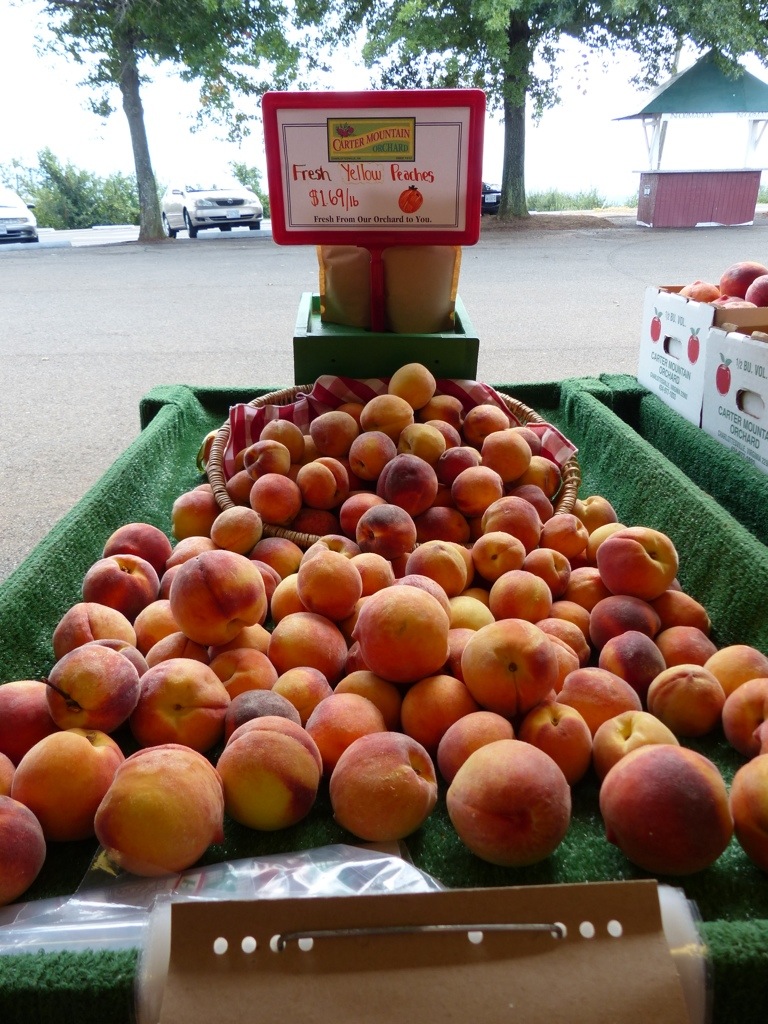
Just down the road from Monticello is Carter Mountain Orchard. Their sign advertising fresh peaches reeled me right in! I had never gone peach picking before and it sounded like a really fun thing to do. Only problem was all the peaches had already been picked off the trees. We were too late for peach picking, unless picking them from here counts?
But we were just in time for apple picking and that was something else I had never done before.
Apple picking was fun, but it was not quite the adventure I had envisioned. I had always pictured myself climbing a ladder (funny, I hate ladders!) to pick the perfect apples. Isn’t that how they always do it in the movies? Anyway, there were no ladders here. Just plenty of apples well within reach. Damn you easily accessible apples, ruining my dreams of movie-style apple picking! : )
Once our apple selections were complete, we headed to the barn where they have lots of delicious treats. A bakery full of pies and cider donuts. And the country store full of preserves and other fruity goodness. We indulged in some peach cider donuts and they were worth it!
There are many orchards in Charlottesville, and while this one is the only one I have ever been to, I would highly recommend it based on the beautiful scenery alone! And the cider donuts don’t hurt either!
When Jefferson referenced his “garden” in written records, he was usually referring to his vegetable garden. While the flower gardens of the West Lawn are lovely, they are miniscule in comparison to Jefferson’s vegetable garden. Monticello’s terraced vegetable garden is 1,000 feet long and the 19th century garden has been restored by referencing the meticulous notes of Jefferson’s Garden Book. Jefferson grew about 330 varieties of vegetables and herbs and today the garden serves as a seed bank to preserve 19th century vegetable varieties.
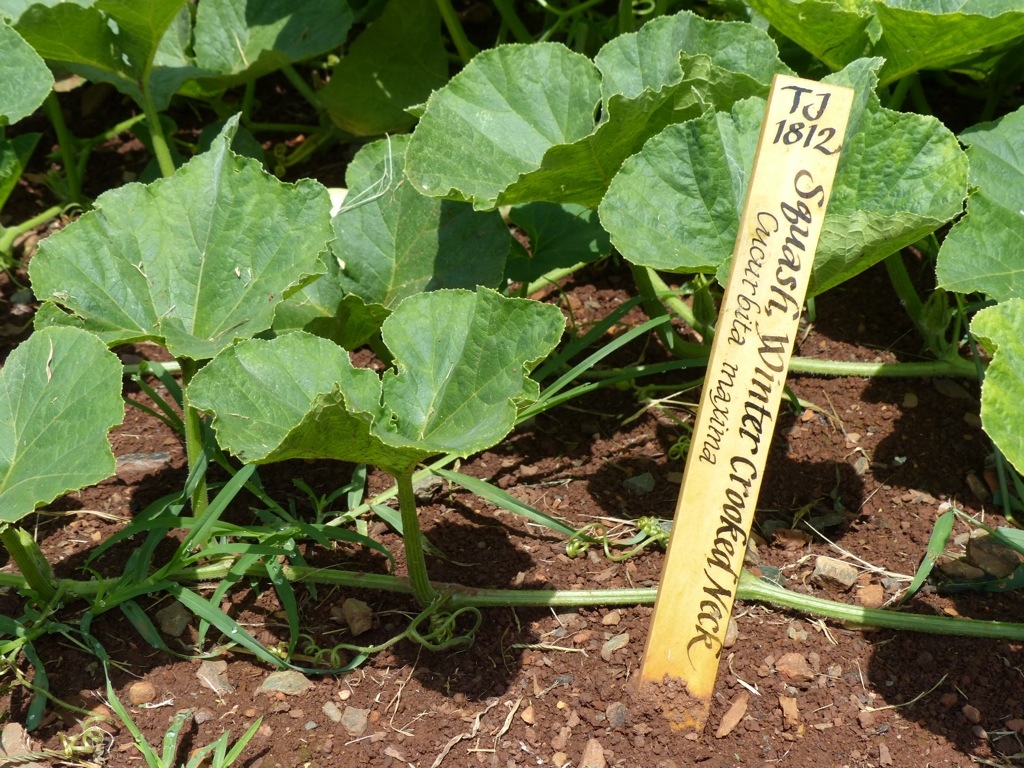
Today, the vegetables in the garden are labeled according to the notes found in Jefferson’s Garden Book. The stake marking this squash variety is marked “TJ 1812” which means it was first referenced in Thomas Jefferson’s Garden Book in 1812.
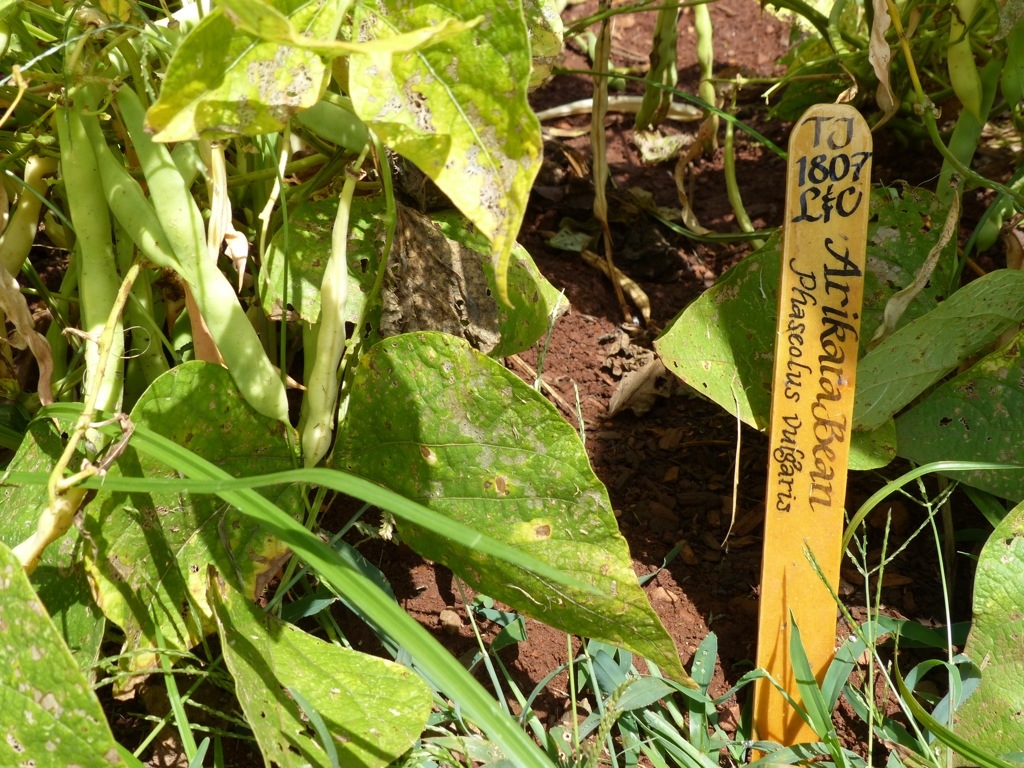
The stake marking this bean variety is labeled in a similar manner, but also shows “L&C” below the year. This means that this vegetable was brought back from the Lewis and Clark Expedition and planted in Jefferson’s garden in 1807. Jefferson’s presidency is most known for the Louisiana Purchase as well as the Lewis & Clark Expedition. In addition to adding vegetables to his garden, Jefferson also had many expedition “souvenirs” throughout his home that were brought back by Lewis & Clark.
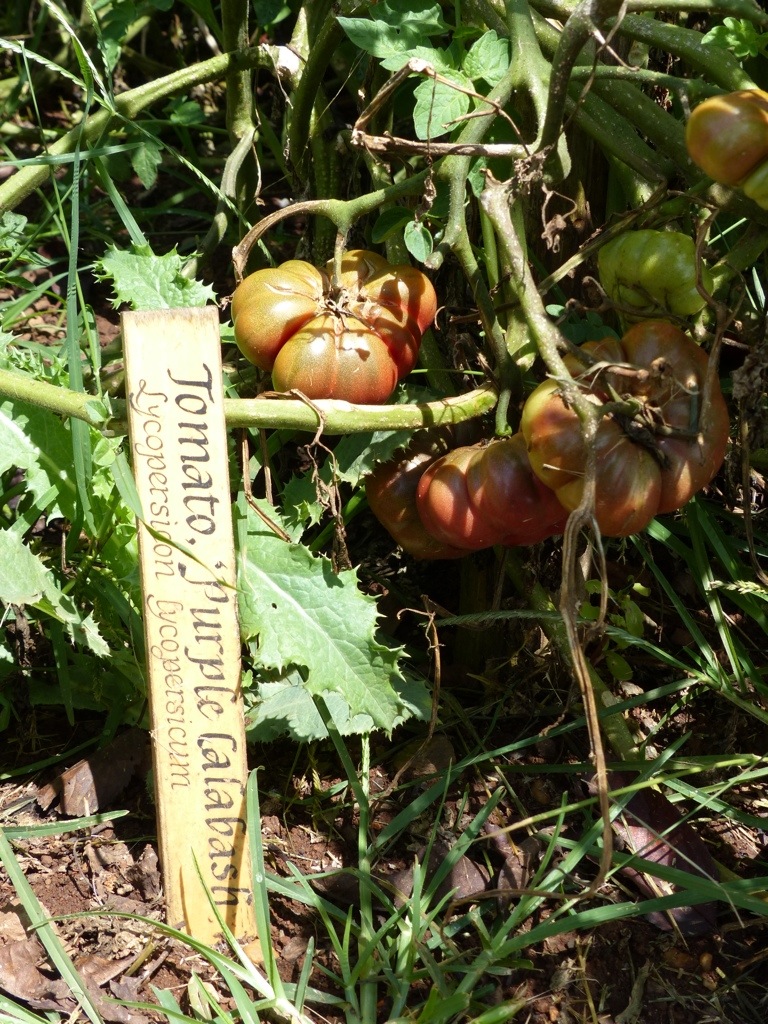
There are also other vegetables currently growing at Monticello that were never recorded in Jefferson’s Garden Book. This tomato plant for example, does not have his initials and/or a year marked on the stake, but it is believed that it was likely planted in Jefferson’s garden based on what vegetables were commonly planted in the region at that time.
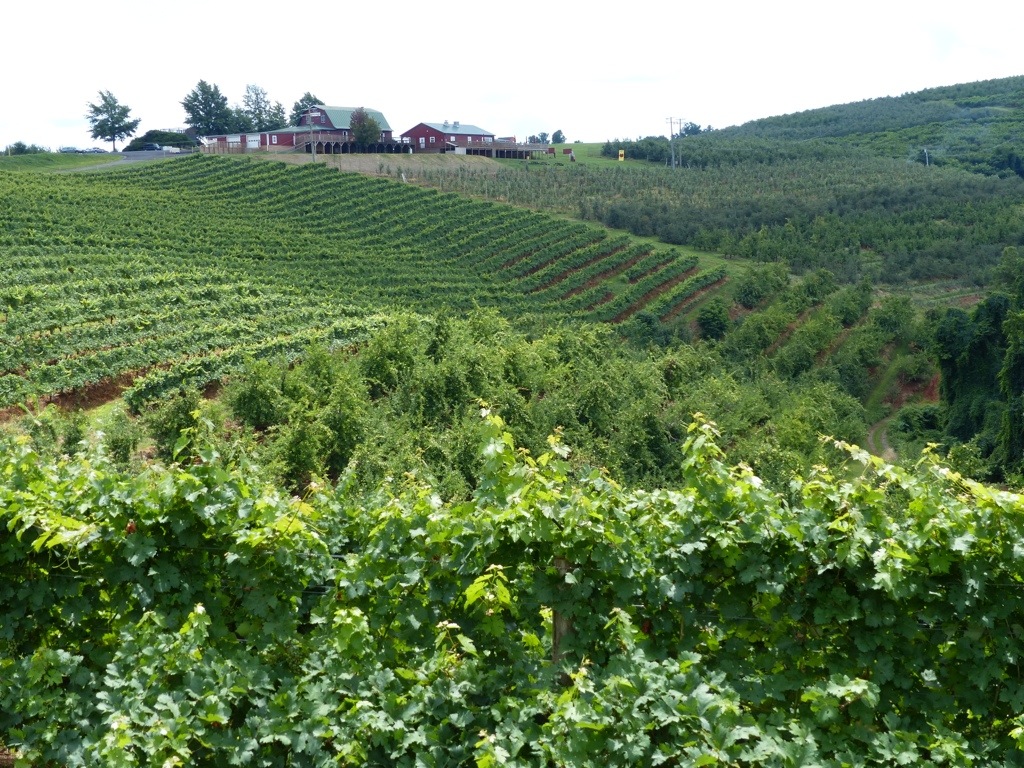
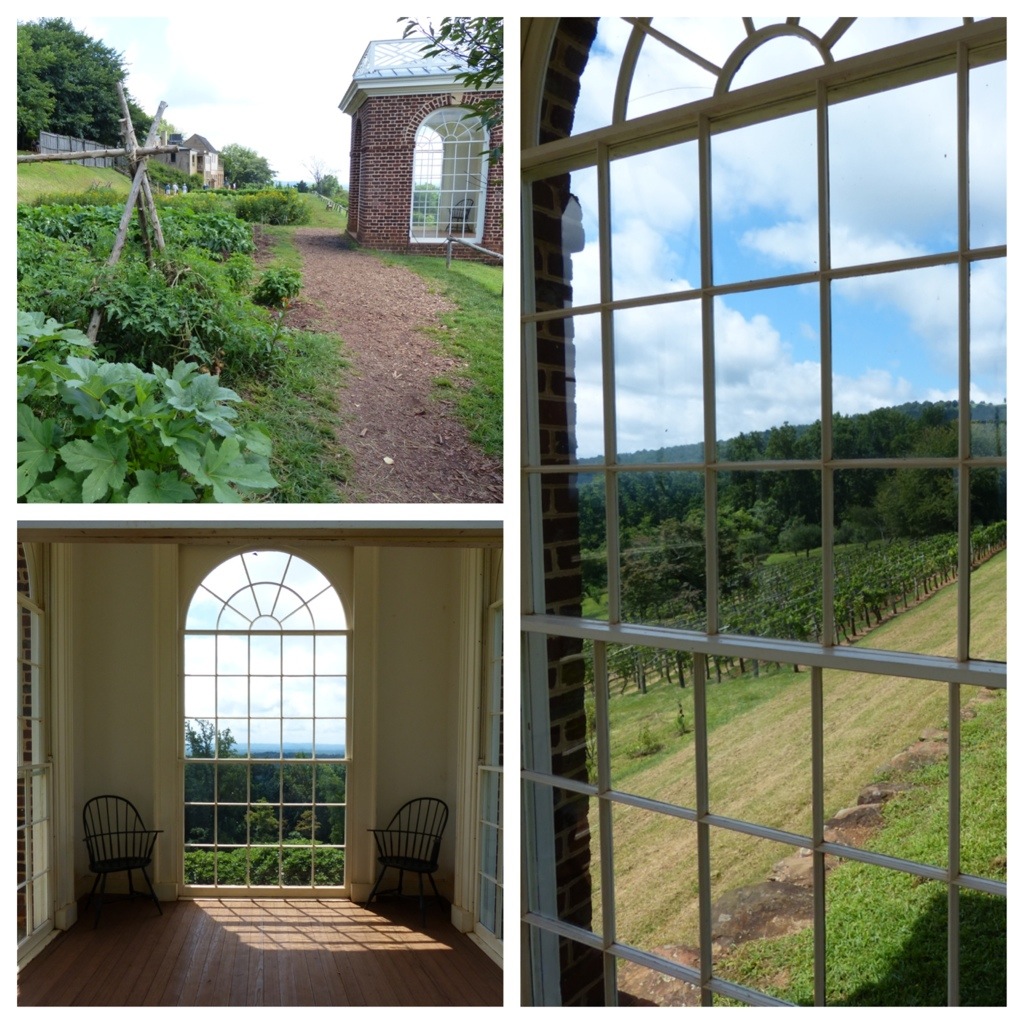
The garden pavilion sits in the middle of the garden and overlooks the eight-acre orchard, vineyard and berry plots. Jefferson used the pavilion as an evening reading location.
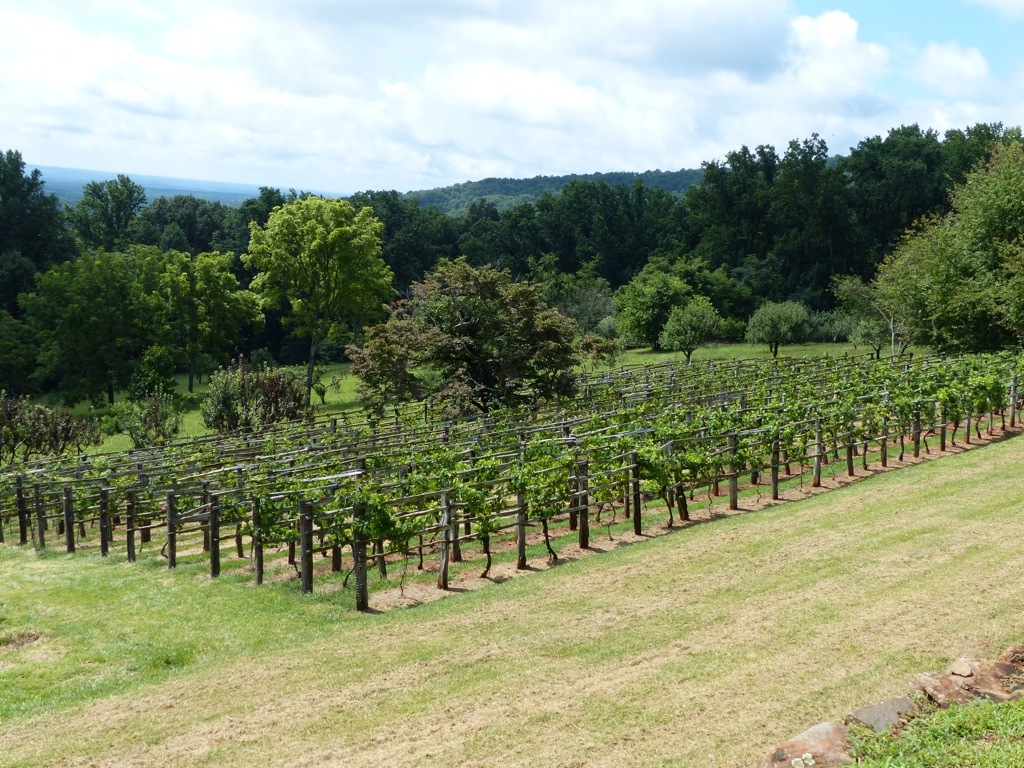
Thomas Jefferson was one of America’s original wine enthusiasts after serving as Minister to France. He was committed to growing European varieties of grapes at Monticello with the hopes of making his own wine. He never succeeded. Before the development of modern pesticides, these European varieties were extremely susceptible to local pests that killed the crop. However, Jefferson’s vision did lead to a successful wine market in Virginia. Today, Virginia ranks 5th in the country for the number of wineries and production of wine. And while it didn’t happen in Jefferson’s lifetime, Monticello successfully bottles about 1,000 bottles of wine every year.
Today, the vegetables and fruit grown at Monticello are used at their tasting events, served at the Café at Monticello, or distributed to employees.
A visit to Monticello should be at the top of everyone’s list when visiting Charlottesville. The grounds are extensive and you could easily spend an entire day there. Tickets cost $24 each which includes a guided tour of the first floor of the house and then you are welcome to spend as much time as you like exploring the grounds. There are two optional guided tours included in the regular admission price: Gardens & Grounds and Slavery at Monticello. Or you can just opt to explore the grounds on your own, which is what Rob and I chose to do. Additionally, they offer tours of the upper floors of Monticello, but those tickets are $42 each, they only do a limited number each day, and they sell out quickly. So, maybe next time we will see the rest of the house…
Thomas Jefferson spent much of his life involved in a variety of public service positions and his life was full of notable achievements. Undeniably, Jefferson’s greatest achievement was drafting the Declaration of Independence. To see a brief timeline of his life and other achievements, click here. Despite his very full schedule, Jefferson managed to find the time to design every aspect of Monticello; a project that he continuously updated and modified over a period of 40 years. He was a self-taught architect and began building Monticello when he was 26 years old after inheriting the land from his father. The house is situated on the summit of an 850 foot high peak in the Southwest Mountains. The name Monticello derives from Italian meaning “little mount.” Visitors are shuttled to the front entrance at the top of the mountain.
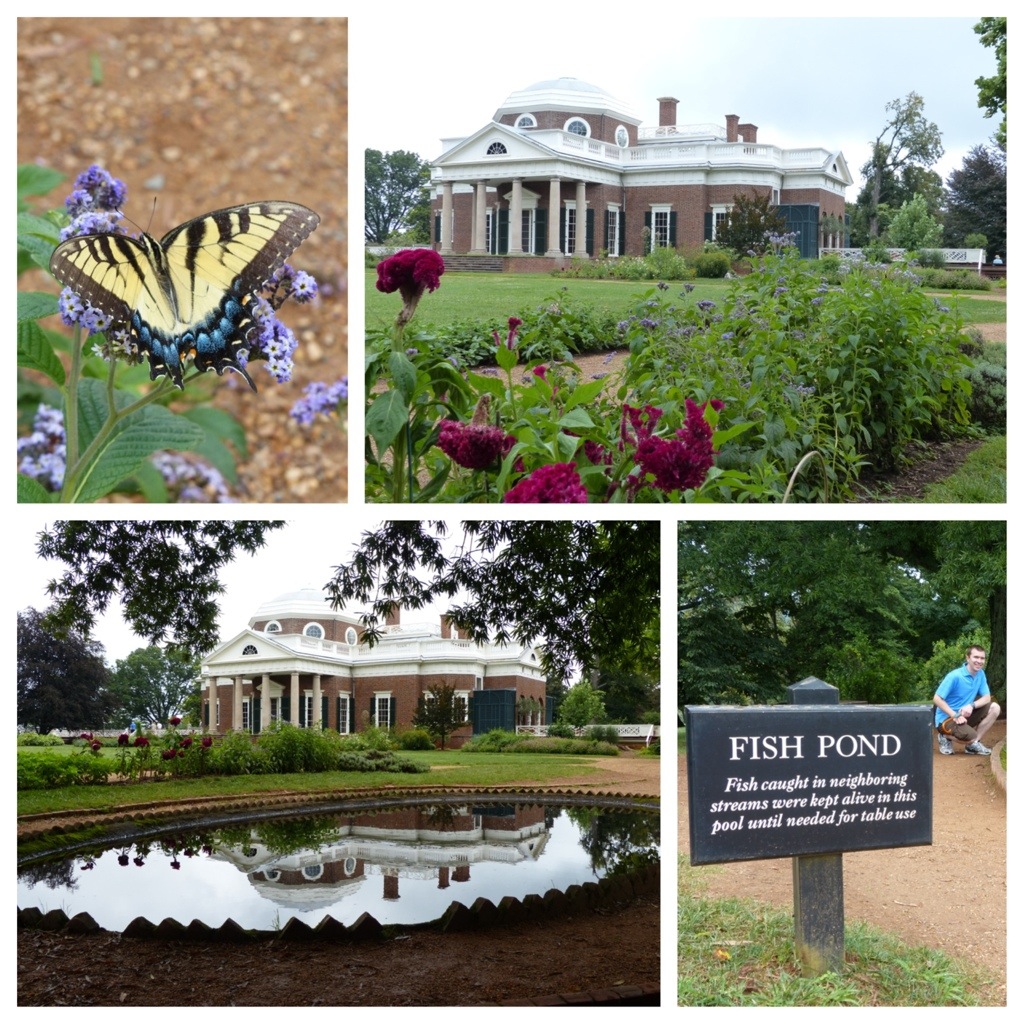
No pictures were allowed to be taken inside the home, but if you would like to get a glimpse of the interior rooms, click here. The view of Monticello from the West Lawn (rear of the house) is more famous than the view of the front of the home. The West Lawn is vibrant with beautiful gardens and butterflies galore. There is also a fish pond that was more function, than decoration. Fish were caught in nearby bodies of water and then “stored” in the fish pond until needed. A fabulous idea for an era before refrigerators!
Jefferson was always very outspoken about his views against slavery. However, he owned more than 600 slaves in his lifetime. He inherited about 175 slaves and the numbers naturally increased by the procreation of enslaved families. Jefferson purchased fewer than 30 slaves during his lifetime, which still seems like a lot to me for someone so outspoken about the abolition of slavery. But it is reported that he purchased these “few” based on labor needs and also to unite spouses. A fascinating aspect of Jefferson’s design of Monticello was the incorporation of hidden “dependencies.” Dependencies were necessary service rooms that remained accessible to the family and the slaves that worked there, but they were not visible to the public or even guests visiting the home. Two wings connected by an underground passageway provided the work spaces for the slaves that maintained the household. The kitchen, smokehouse, carriage bays, ice house, etc. were all connected to the home for easy access, but remained well out of public view. Did Jefferson have a guilty conscience for owning slaves, thereby designing his home in such a way to mask his contradiction?
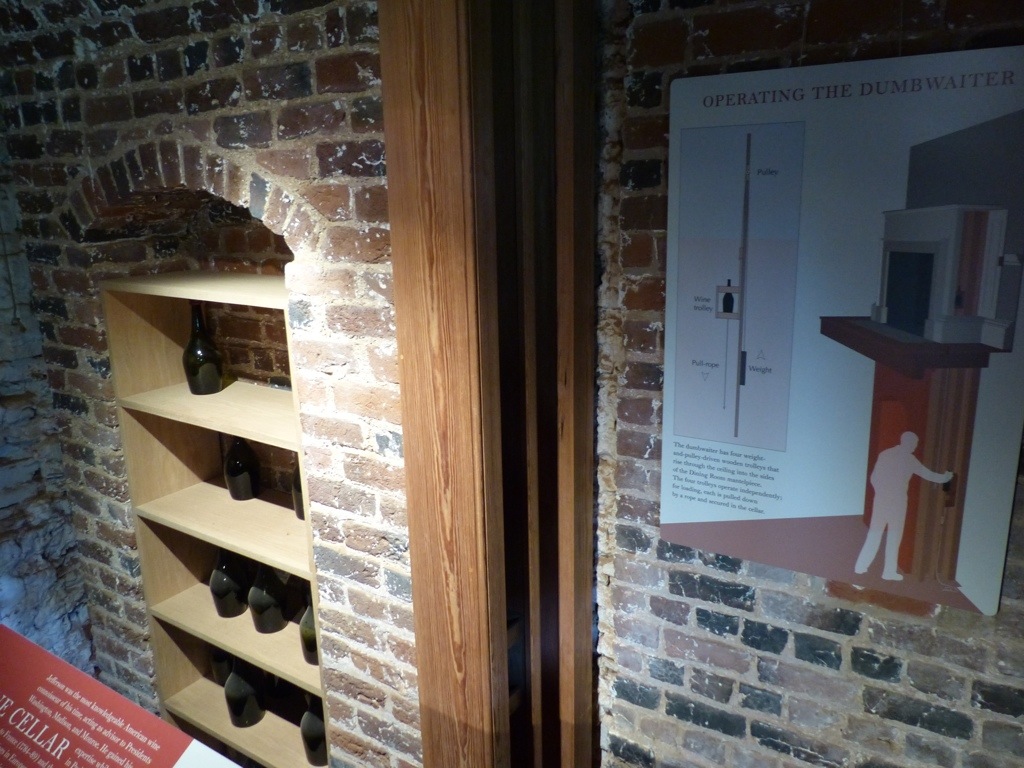
My favorite part was the wine cellar fully equipped with a dumbwaiter that lifted wine directly to a hidden compartment in the fire place of the dining room! While Jefferson was hosting a dinner with guests he would simply send the empty bottle down in the dumbwaiter and that was the signal for the slave in the wine cellar to promptly replace it. Now of course I am NOT an advocate of slavery. But I AM an advocate of speedy wine replenishment! Pure genius.
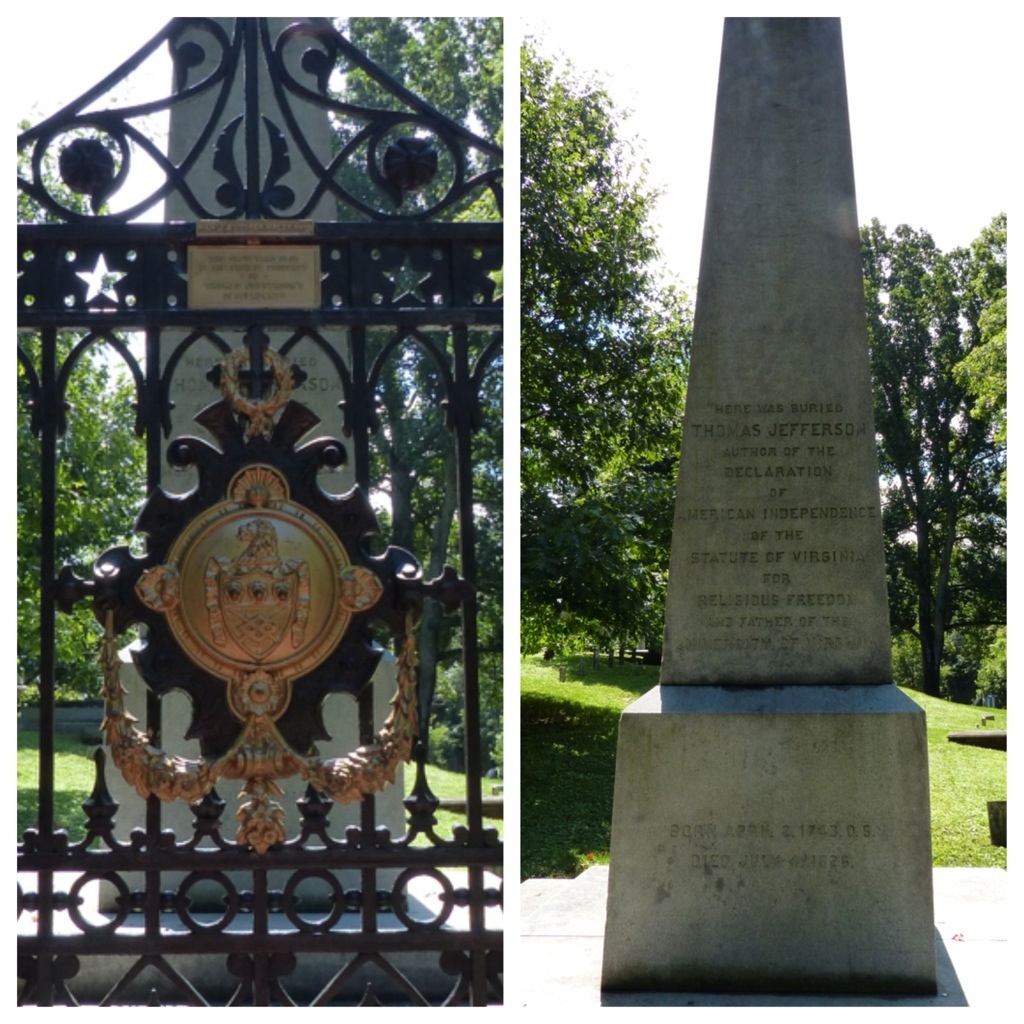
Thomas Jefferson chose his grave site at Monticello and he also wrote the epitaph for his tombstone. “Author of the Declaration of American Independence, of the Statue of Virginia for Religious Freedom, and Father of the University of Virginia.” It is said that these are the accomplishments that Jefferson was most proud of and what he wanted to be remembered for. Some might wonder why becoming a U.S. President didn’t make the cut. But Jefferson wanted to be remembered for what he gave to the people, not what the people gave to him. Jefferson died on July 4, 1826, exactly 50 years after signing the Declaration of Independence.
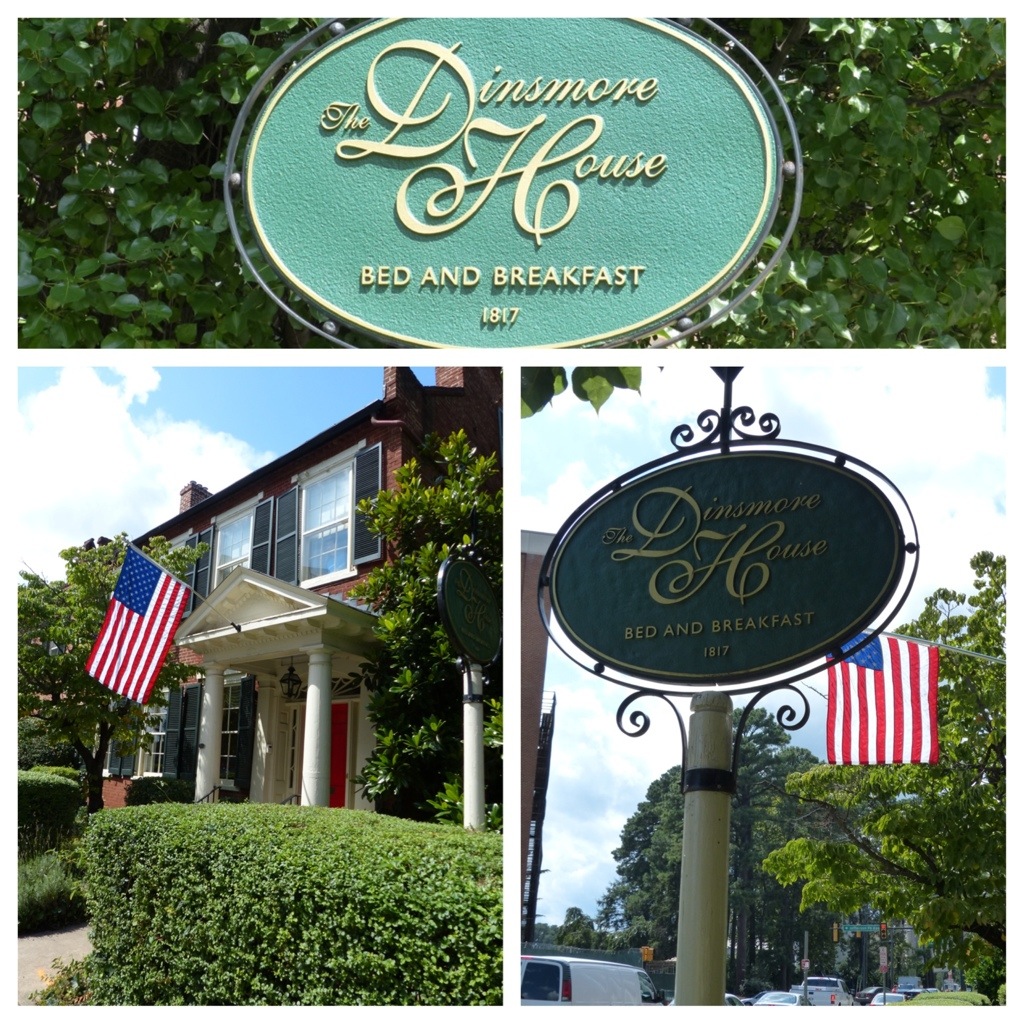
Rob and I wanted to stay at a cozy B&B during our stay in Charlottesville. We chose to stay at the historic Dinsmore House Inn in the heart of Charlottesville. This charming B&B is conveniently located one block from the University of Virginia and only 5 miles from Monticello. The home was built by James Dinsmore in 1817. Dinsmore was Thomas Jefferson’s master builder and his monumental construction achievements include Monticello, Montpelier, and the University of Virginia.
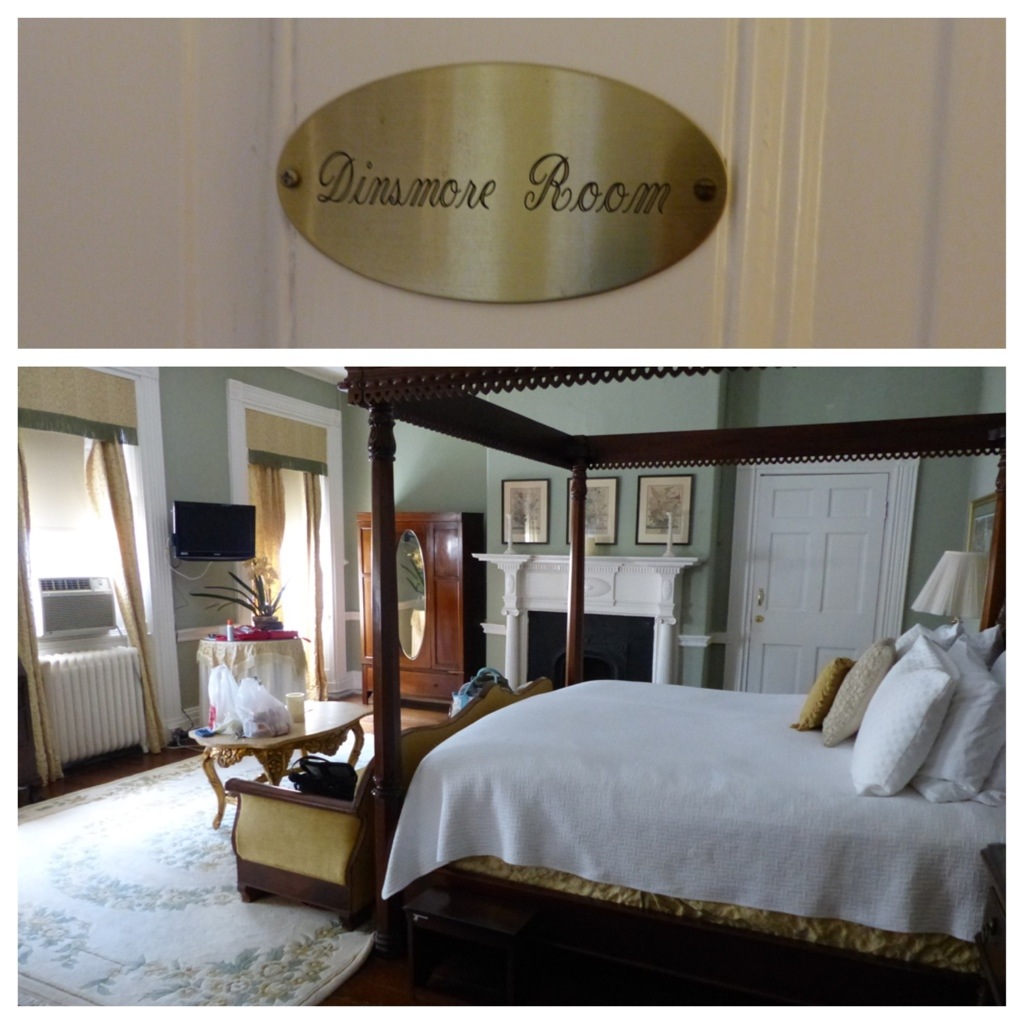
The inn was absolutely beautiful and I couldn’t have been more pleased with our accommodations. There are 8 guestrooms available and we stayed in the Dinsmore Room. The room was gorgeous and I couldn’t believe how large it was. Despite having a four-poster king-size bed, there was still an incredible amount of space in the room. The bathroom was also very nice with a large claw foot tub as well as a separate shower.
Every morning they serve a full complimentary breakfast. The meals we had were fabulous! Delicious dishes with fresh, local fruit, homemade English muffins, and even their very own homemade preserves. The preserves were actually the BEST I had ever had! S.E.R.I.O.U.S.L.Y.!! A delicious concoction of figs, apple and pear, oh my! The owner was very accommodating about dietary restrictions and made sure that everything was to our liking. In addition to the breakfast, the inn also hosts an afternoon social every day in the parlor offering light refreshments and a complimentary glass of wine or tea. I think it goes without saying here that I skipped the tea and went straight for the wine! As if that wasn’t hospitality enough, the inn always keeps a stocked refreshment station on the breakfast porch where guests can help themselves to free snacks, soft drinks and water. We thoroughly enjoyed our stay at the Dinsmore House Inn. If you ever find yourself in the Charlottesville area and in need of a good B&B, I would definitely recommend this location.
Rob and I recently planned a little getaway to Charlottesville, VA. Charlottesville is a charming little city about 100 miles south of Washington, DC. The area is rich in history and offers tourists a wide variety of things to do and see. Charlottesville and neighboring Albemarle County were home to three of our founding fathers that later became our 3rd, 4th and 5th Presidents (Jefferson, Madison, & Monroe – to save you the effort of having to Google it!). Of those 3, Thomas Jefferson definitely had the greatest impact on our nation and his spirit remains very much alive in Charlottesville! Everywhere you turn in this region, you are reminded of one of the world’s most important historical figures.
Charlottesville is home to Monticello (Jefferson’s residence) as well as the University of Virginia, both of which were designed by Thomas Jefferson himself (both have also been designated UNESCO World Heritage Sites). Not far from Monticello is Ash Lawn-Highland, home to President James Monroe (they were practically neighbors and apparently very good friends). In addition to its historical sites, Charlottesville also has an active entertainment scene, plenty of outdoor activities around the Blue Ridge Mountains, and more than 20 vineyards along the Monticello Wine Trail. What more could you ask for in a charming little city? We only stayed in Charlottesville for two nights, so we knew we wouldn’t have time to see all that the city had to offer. But to get a good feel of the area, our plan was to stay at a cozy B&B, visit a local winery, and tour Monticello. I will cover the details of our trip in subsequent posts. Stay tuned…
Our trip to Turkey is exactly one month away and I could not be more excited! However, due to the civil unrest that broke out in Turkey a couple of months ago, many people have asked me if I am worried about traveling there during a somewhat tumultuous time. The short answer: No, I am not worried.
Anti-government protests erupted in Turkey in May and resulted in thousands of injuries as well as at least five deaths. The protesting began in Istanbul and quickly spread throughout other cities in Turkey. While the situation has calmed down tremendously since June, there are still sporadic pockets of civil disobedience throughout the country. But I am not deterred! Someone find me a “Turkey or Bust” bumper sticker pronto! I am happy the situation appears to have quieted down considerably, but I think it is safe to say that I would still be packing my bags even if it hadn’t.
Sound crazy? You might think I’m off my rocker, but I’m chalking it up to the fact that my husband and I are pretty savvy travelers with a keen sense of situational awareness. There are very few places that I would be afraid to travel to, especially when there is a coveted new passport stamp on the line! With that being said, I do believe traveling “smarter” can go a really long way. So that is why I just enrolled in STEP (Smart Traveler Enrollment Program) through the State Department. STEP is a free service for travelers living in or visiting a foreign country that allows the State Department to better assist you in the event of an emergency. The program also provides travel alerts and warnings that pertain to any country you are visiting. In short, this program will help you stay informed, stay connected and stay safe! If you have an upcoming foreign trip planned, you can enroll in STEP here.
Last month, I wrote about inspiration after seeing the Honor Flight documentary. I had never heard of the Honor Flight Network prior to that point, but I immediately knew it was an organization that I would be proud to get involved with. And this past weekend, I escorted my very first group of Honor Flight WWII veterans!
I arrived at DCA on Saturday morning and obtained my Gate Access Pass (permits entry to the gates for personnel not actually travelling). Once at the gate, I met the 4 other local volunteers that would be escorting the Honor Flight for the day. In addition to myself, there were 3 active duty military members and one other military veteran.
As the plane approached the gate, the Washington Airport Authority Fire Department “saluted” the plane with their fire hoses!
Then, an announcement was made in the terminal about the incoming WWII veterans and asked the surrounding travelers to stand and greet the veterans as they came off the plane. The immediate wave of support was overwhelming! Everyone gathered around the gate and cheered on the veterans as they made their way into the terminal. It was very emotional and I was extremely choked up the whole time. Since I absolutely hate for people to see me cry, it took every shred of energy I had to fight back the tears. What can I say….patriotism makes me sappy. Even this tough girl has an Achilles heel.
We had two busloads of veterans, guardians and other volunteers that were all part of the SW Florida Honor Flight hub. Once we got everyone loaded up, it was time to visit the memorials. Our first stop was the WWII Memorial. The veterans all seemed in awe of how grand and beautiful the memorial was. I heard one veteran comment, “Something like this… I don’t mind our government spending my money on!” There were local groups of volunteers that were standing by to cheer for these veterans and welcome them to their memorial as they got off the bus.
While at the memorial, I walked around and offered to take their pictures. Some of the feisty veterans said they preferred to have a “pretty girl” in their pictures so they asked for me to be in their pictures instead, to which I happily obliged. A few of the veterans were even more flirtatious. I spent some time talking to a veteran named Lionel and when I mentioned my husband, he said, “You’re married? What am I doing wasting my time talking to you?” I told him I would let him know if things didn’t work out with my marriage.
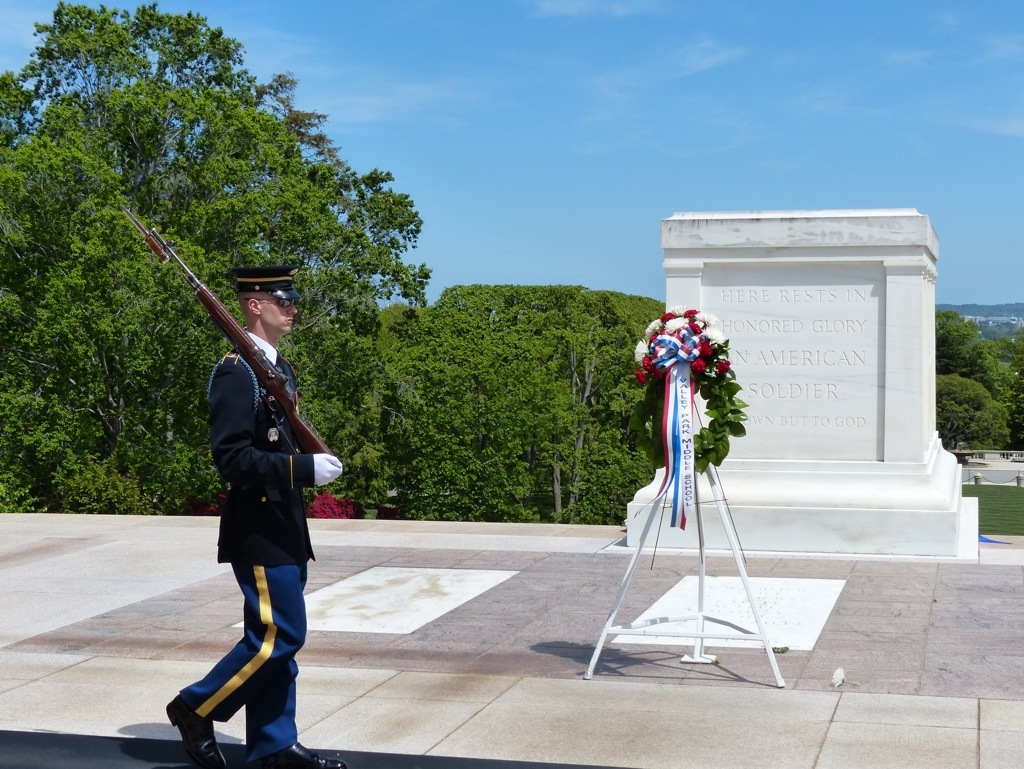
In addition to visiting the WWII Memorial, we also visited the Korean War Memorial, the Vietnam War Memorial, the Marine Corps War Memorial, and Arlington National Cemetery to watch the Changing of the Guard. It was a lot for these senior veterans to do all in one day. It was enough to wear out even the young volunteers! But the veterans didn’t complain about being tired because for them, this was the opportunity of a lifetime and they didn’t want to miss a thing!
Of the 16 million WWII veterans, only about 2 million are still alive, and almost 900 of them die every single day! The Honor Flight Network is committed to flying as many of the surviving WWII veterans as they possibly can to Washington, DC so they can visit and reflect at their memorials before it is too late. If you live in the DC area and you would like to volunteer, please visit http://honorflightdca.wordpress.com/ to view the schedule of when volunteers are needed. If you are outside of the DC area, you can still get involved by volunteering with your local Honor Flight hub.
Editor’s note: I had volunteered with the expectation of being assigned to one veteran as his guardian with hopes of interacting with that veteran for the entire day. However, the 50 veterans that flew to DC from SW Florida were already assigned their personal guardians for the day. Their guardians assisted them in getting to the airport and made the journey with them from Florida. The role of the local volunteers was more of a floater/general escort. I was a bit disappointed that I didn’t get the one-on-one interaction that I was hoping for, but I was still proud to participate in such a worthy cause.
This past weekend, my friend Bonnie and I went to the National Arboretum for the first time. It was a glorious day and it seemed like the perfect opportunity to check out our nation’s living museum. It’s hard to imagine that within a big city like Washington, DC, there lies 446 acres of lush grounds dedicated to conserving and showcasing thousands of varieties of plants. The arboretum is “in bloom” all year long, so no matter what time of year you visit, there will be plenty for you to see. To find out which plants will be in bloom during your visit, see the arboretum’s bloom schedule.
We happened to go on a very busy weekend and it was difficult to find a place to park. We finally managed to find a spot alongside a field of lilac shrubs. As soon as we stepped out of the car we were overwhelmed by the smell of fresh lilac. (Side note: I had been thinking about planting a lilac shrub in our back yard and after seeing this magnificent field of lilacs I went out and bought one the very next day!)
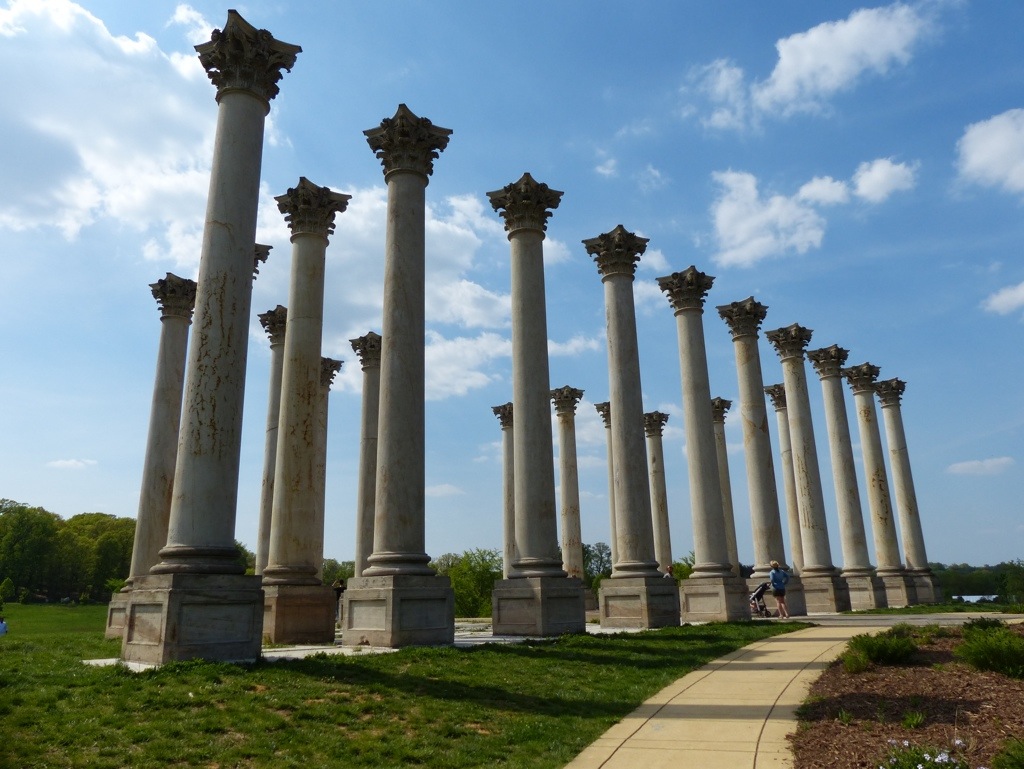
What we stumbled upon next was like something out of Ancient Rome or Ancient Greece. It’s not every day that you see free-standing columns amidst a meadow in the United States!
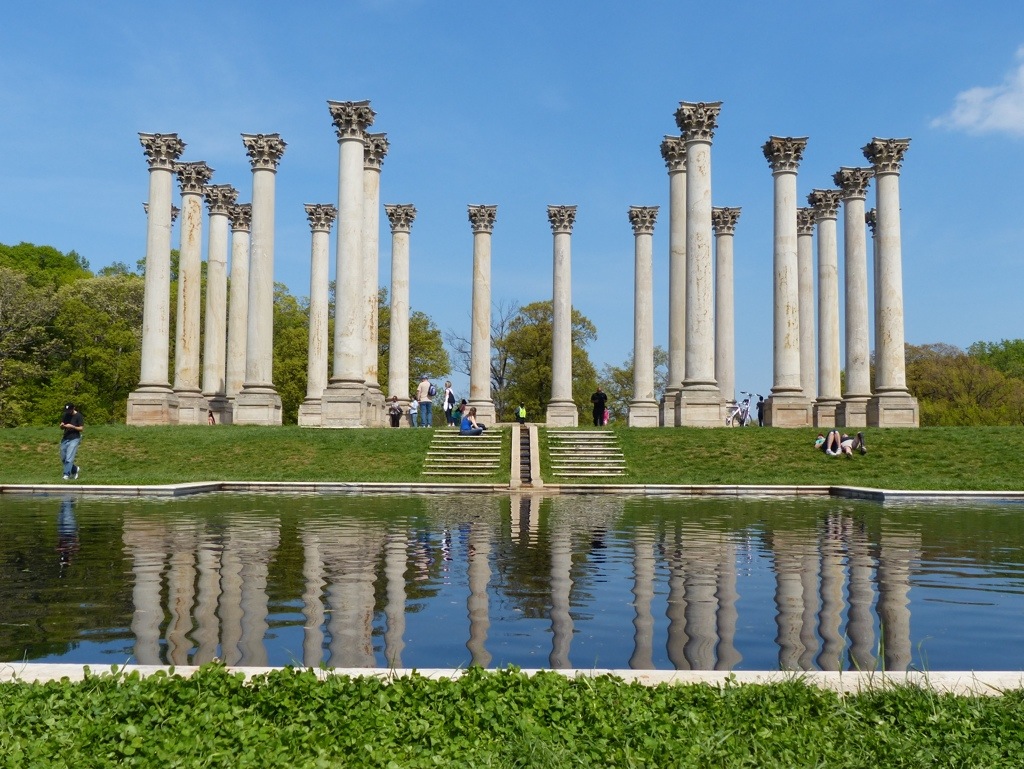
But the columns are of course, not ancient. These Corinthian columns were originally on the East Portico of the US Capitol. But due to an oversight in design, the columns didn’t appear to adequately support the Capitol dome which was completed in 1864. The columns were removed and an addition was built on the east side of the Capitol in 1958. In the 1980s, the Capitol Columns found their new home at the National Arboretum. The columns overlook 20 acres known as the Ellipse Meadow. They are set on a foundation of stones that also used to be on the east side of the Capitol. And nothing is complete in DC without a reflecting pool!
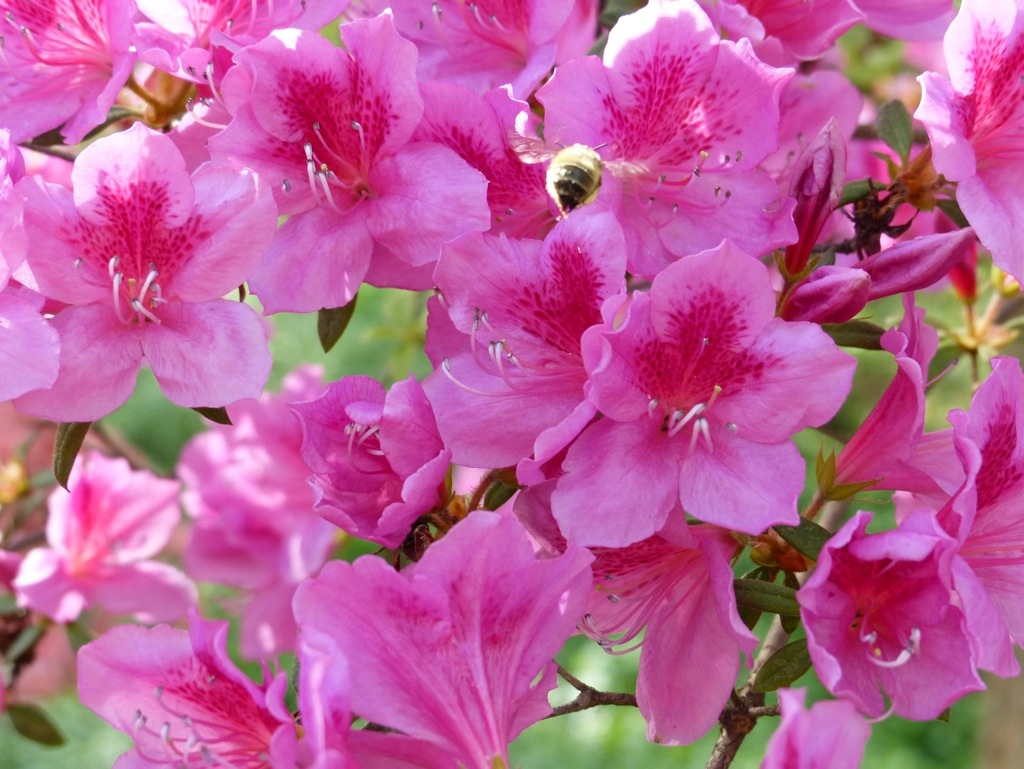
The current showstoppers in bloom at the arboretum are the azaleas. The area known as Mount Hamilton is ablaze with color from the all of the azaleas that flood the hillside. There are literally thousands of azalea shrubs in every variety and color imaginable and visitors can walk along footpaths to get a good view of them all.
With over 9 miles of winding roads within the arboretum, we barely scratched the surface during our visit. We spent most of our time looking at the azaleas, but here are a few other plant varieties we enjoyed.
I especially loved this Lace Bark Pine whose trunks look like army camo!
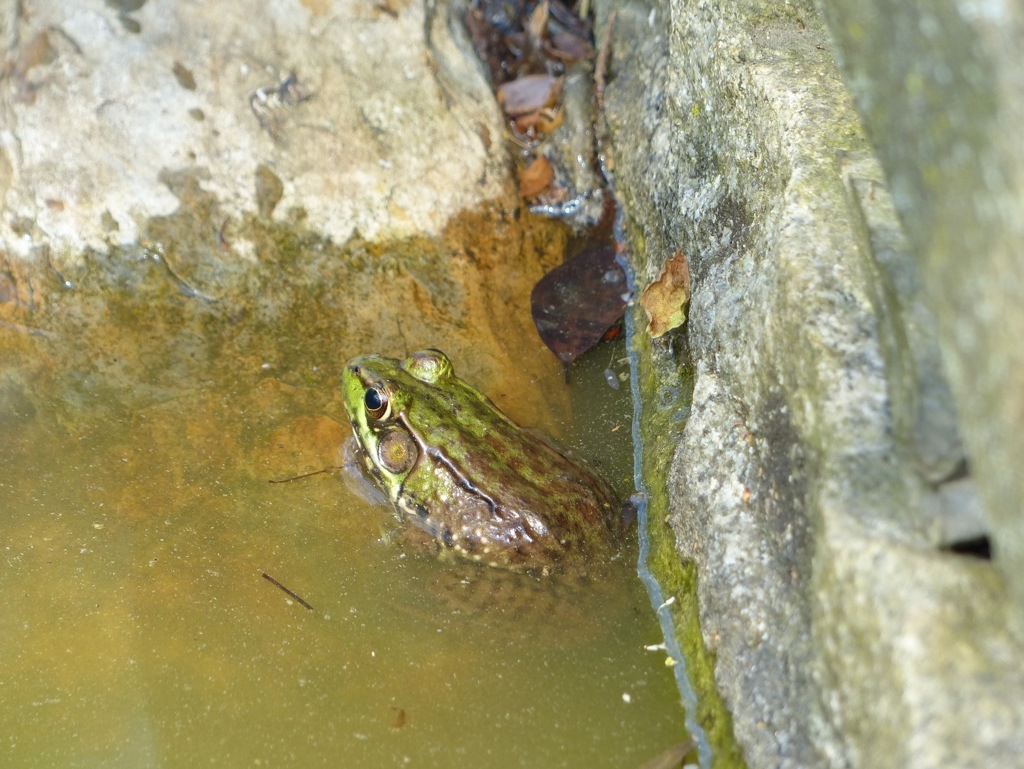
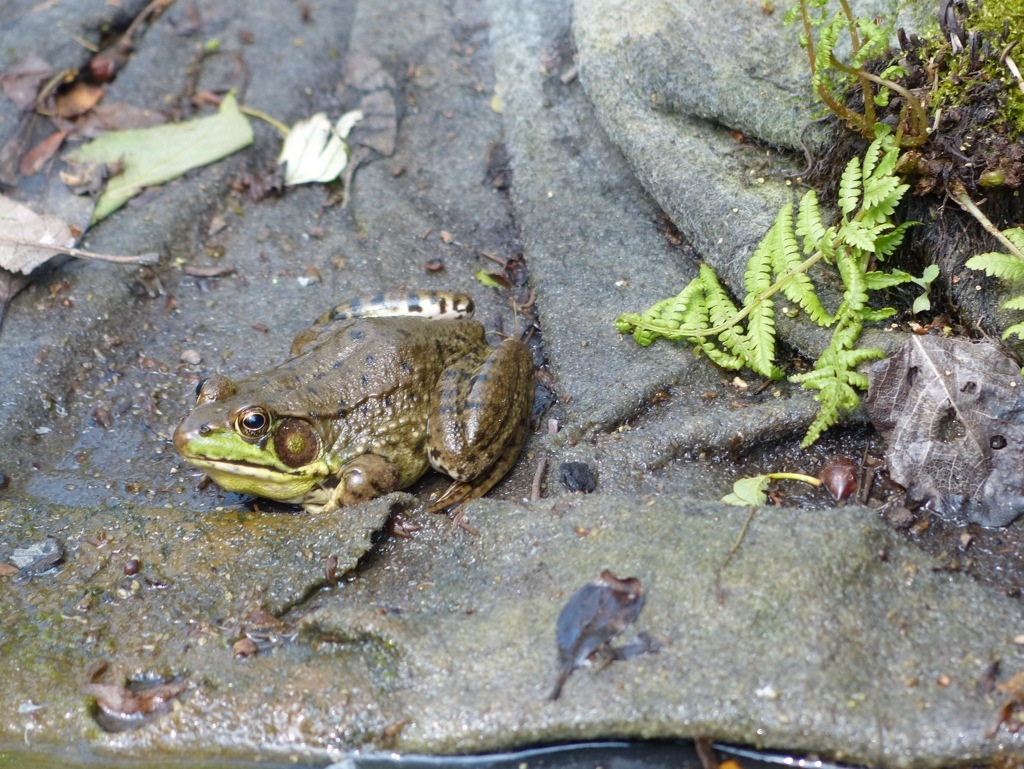
We even got to see some wildlife. In addition to the frogs below, we also spotted a fox.
This is definitely one DC landmark that I intend to revisit!
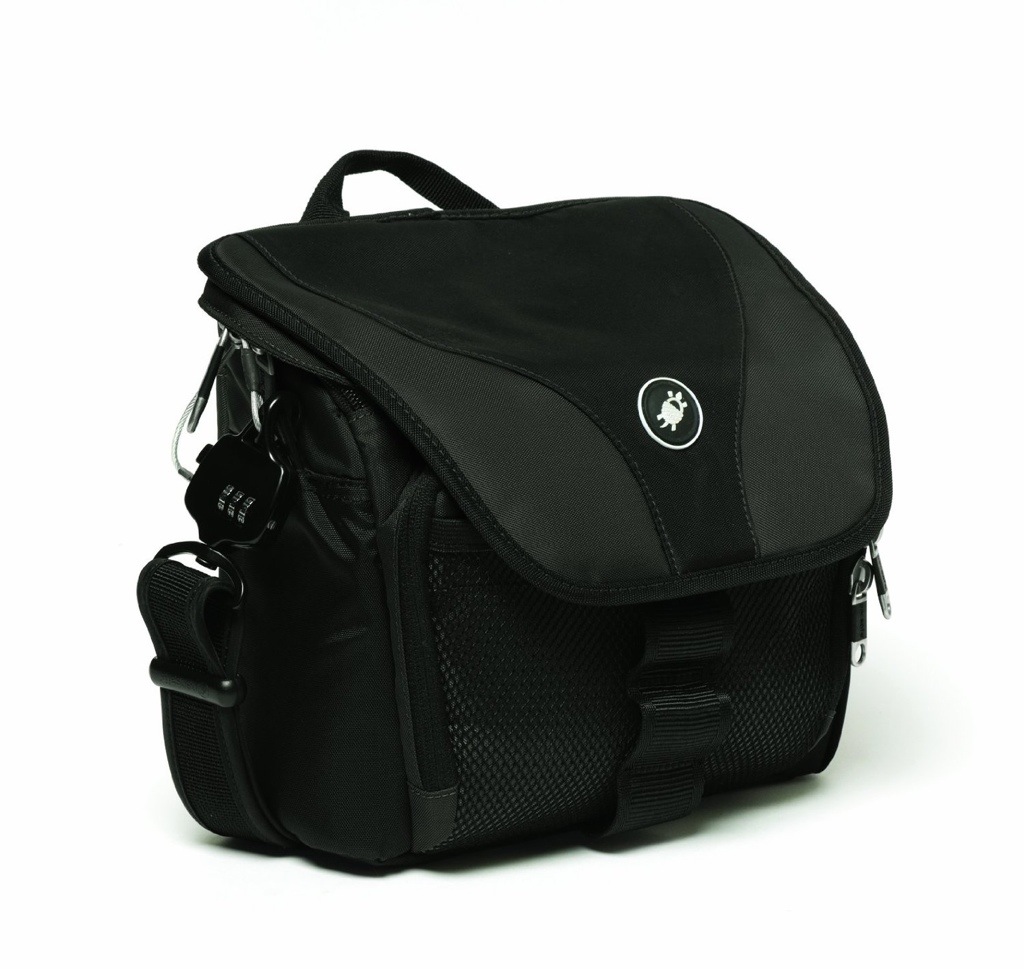
Since I recently bought a shiny new camera, I also had to buy a new camera bag to keep her cozy and warm. Luckily, this purchase didn’t require any research (very much unlike my camera purchase) because I knew immediately what brand I would buy! About a year ago I discovered Pacsafe products and they are now my go-to brand for all of my travel baggage needs. Pacsafe offers high-quality travel gear with a boat load of built-in anti-theft technology. Most of their products include features such as: slash-proof straps, RFID blocking pockets, locking zippers, & exomesh slash-guards.
photo from google images
Have you ever had your gear stolen? If it has never happened to you personally, I’m sure you have at least heard stories from friends or family about getting ripped off while traveling. Having your passport or credit cards stolen can really ruin your vacation. Becoming a victim of identity theft could cause you to freeze all of your accounts while still in a foreign country. And those amazing photographs you shot, well they could be gone forever because of someone with sticky fingers! I like to think that I am a savvy traveler and I try to always maintain my situational awareness. Hauling my gear in a Pacsafe bag does not mean that I get to completely let my guard down while traveling, but it does provide added peace of mind. I am by no means suggesting that Pacsafe products will guarantee the security of your belongings, but I will say they add a few more barriers between your precious cargo and those pesky thieves.
This bag has plenty of padding, as well as anti-theft features that will keep my camera well protected. This bag also has lots of separate gadget pockets that are perfect for battery chargers, spare batteries, memory cards, cell phones, even a water bottle. This bag has enough room to carry all of my essentials while day tripping, thereby eliminating the need to also carry a purse. Score!
Why the turtle? Pacsafe’s products were initially inspired by the independent global wanderings of the sea turtle. They now have their own turtle foundation to help the dwindling turtle population. And we all know how much I love to help the turtles! If you don’t know…click here and here.
As mentioned in a previous post, I was jonesing for a camera upgrade, but choosing the right camera for me was no easy task. After diligently researching every last detail (along with helpful input from others), I finally selected the camera that will (I hope) exceed my expectations as I trot around the globe.
The Canon PowerShot SX40 and the Nikon CoolPix P510 were among my top 4 finalists, but in the end, they didn’t make the cut. Canon and Nikon are both well respected brands in the photography community, but the reviews I read led me to believe I would have been disappointed with these cameras based on shutter speed, battery life, and possibly even image quality. Both of these cameras had amazing optical zoom capabilities, but I was looking for more than just a good zoom. I was in search of a well-rounded camera that would suit all of my needs, not just a one-trick pony.
I then went back and forth (for days!) between the Sony CyberShot HX200V and the Panasonic Lumix FZ200. They each had certain specifications that outdid the other, making it difficult to pick a clear winner. For example, the Sony had more megapixels, but the Lumix was slightly faster. The Sony had a GPS function, while the Lumix had a longer battery life. The Sony had a longer zoom, but the Lumix had better image quality. The Sony was cheaper and more within my price range, but the Lumix had a sharper lens. I agonized over these details trying to figure out which specifications were most important for my travel needs.
The Lumix was more expensive, but in the long run, I think I’m sure it is the better camera. The deciding factor was the Lumix’s amazing zoom lens that has a constant f2.8 aperture through its entire zoom range! This is an amazing feature and it is the first camera in its class that has been able to accomplish this. What does all of that even mean, you ask? It means this camera is pretty stinkin’ awesome! In order to keep the size and the cost of a camera down, most super zoom lenses must decrease the aperture size as the lens zooms in. This lets in less light, which in turn can affect image quality. But not the Lumix FZ200. This super zoom lens lets in the same amount of light even when the lens is fully extended!
I originally ordered this camera through an online website that I had never heard of before because it was listed $75 cheaper than on Amazon.com. Ten days later and my camera had not even been shipped yet. I called the shady website (with an even shadier Customer Service Rep) and learned that my camera wouldn’t arrive for another week! I decided the $75 savings wasn’t worth it, so I cancelled my order. Amazon shipped the camera immediately and it arrived two days later. Lesson learned….I heart Amazon!
Because of my little ordering snafu, I have only had the chance to use the camera once. I used the camera on our recent trip to Norfolk and you can see those pictures here. So far I am extremely happy with my choice and I can’t wait to play with it more.
Do you know a lot about cameras? Do you think I made the right choice?



























 Where In The World Is Dayna...